Landing Page A/B Testing: Split Testing and Conversion Rate Optimization Done Right
Landing page A/B testing done right: what to test first, how to know a result is real, and when to call it. Honest conversion rate optimization guidance.
Written by

Share this
Unlock exclusive Atomicat content
Beyond the blog (/blog), browse our free marketing resources and free tools for calculators and templates (/templates). If you came here searching for landing page tips or landing page best practices specifically, start with the pillars above before browsing further. Browse /resources and /tools.
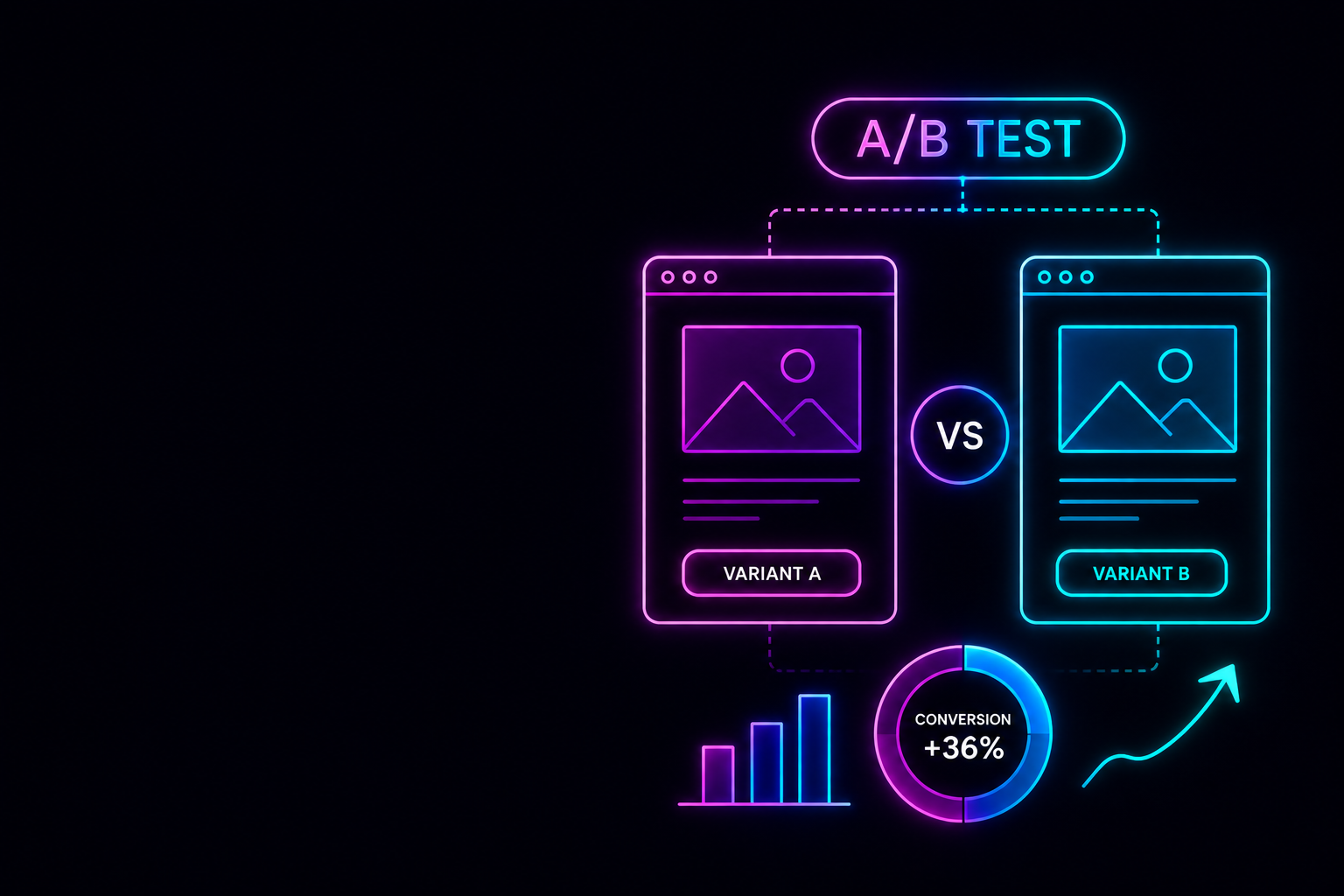
Landing page A/B testing separates real wins from luck. Good landing page A/B testing is conversion rate optimization built on honest split testing and sound experiment design. This guide explains landing page A/B testing, conversion rate optimization, split testing, and experiment design so your landing page A/B testing produces truth, not confident nonsense.
What landing page A/B testing measures
Landing page A/B testing splits traffic between two versions and compares conversion. The goal of landing page A/B testing is not which version won, because split testing guarantees one will by chance; the goal of landing page A/B testing is whether the gap is real. That is the whole of conversion rate optimization, and it is why experiment design matters in every round of split testing.
Landing page A/B testing is telling signal from noise. Split testing on identical pages still shows a gap, so landing page A/B testing and good experiment design exist to answer one conversion rate optimization question: is this gap bigger than randomness?
What to test first in landing page A/B testing
Conversion rate optimization tests in descending impact, and landing page A/B testing should follow that order.
- The offer: the biggest lever in landing page A/B testing and conversion rate optimization; split testing the offer moves results by multiples.
- The headline: the highest-leverage copy in landing page A/B testing; experiment design should test the promise, not the wording.
- The structure: long vs short; structural split testing beats cosmetic landing page A/B testing for conversion rate optimization.
- Proof: high-value landing page A/B testing on higher-priced offers, where experiment design tests belief.
- Everything else: button colour last; this is where weak conversion rate optimization wastes split testing traffic.
The common failure is starting landing page A/B testing at the bottom, where split testing tiny changes wastes conversion rate optimization effort.
The honest part of landing page A/B testing
This is where landing page A/B testing and conversion rate optimization are usually broken. A large share of "significant" split testing wins are false positives, produced by calling landing page A/B testing early, peeking, and loose thresholds. Sound experiment design fixes that.
Set the sample size
Experiment design decides, before landing page A/B testing starts, how many conversions each version needs. Conversion rate optimization depends on baseline rate and effect size, so split testing a low-converting page needs more traffic. Use a calculator; do not eyeball landing page A/B testing.
Do not peek
The most damaging habit in split testing is stopping landing page A/B testing when a version leads. Peeking inflates false positives, so experiment design fixes the sample size and duration, and conversion rate optimization waits for it.
Respect confidence and duration
Conversion rate optimization uses a 95% confidence threshold; lower thresholds give more fake landing page A/B testing wins. Run split testing across full weeks, or experiment design misses weekday and weekend behaviour, and landing page A/B testing draws the wrong conversion rate optimization conclusion.
When to call a landing page A/B testing round
Landing page A/B testing is done when it reaches the sample size experiment design set, not when it looks good. Then split testing gives three honest conversion rate optimization outcomes:
- A clear winner: ship it, and landing page A/B testing makes it the new baseline.
- A clear loser: valuable conversion rate optimization learning from split testing.
- No difference: the most common landing page A/B testing outcome, and not a failure of experiment design.
Kill landing page A/B testing early only for a broken variant, never for impatience, because early confidence is exactly what conversion rate optimization and split testing exist to resist.
Experiment design that teaches you something
Good experiment design isolates cause. Landing page A/B testing changes one meaningful thing, or split testing cannot tell which change won. Frame every landing page A/B testing round as a hypothesis, so conversion rate optimization learns whether it wins or loses. Keep a landing page A/B testing log; over a year that experiment design record is the best conversion rate optimization asset you own.
The traffic reality of landing page A/B testing
Honest landing page A/B testing needs traffic. Low-traffic pages cannot support fast split testing, so conversion rate optimization there means testing big swings with experiment design that detects large effects. Match landing page A/B testing ambition to traffic; that is part of conversion rate optimization discipline, not a compromise of split testing.
Frequently asked questions
What should I A/B test first?
In landing page A/B testing, test the offer, headline, then structure. Conversion rate optimization moves most from these; split testing button colour last is weak experiment design.
How long should landing page A/B testing run?
Until it reaches the sample size experiment design set, across full weeks. Never stop split testing when a variant leads, because that breaks conversion rate optimization.
What confidence level for landing page A/B testing?
95%. Lower thresholds give more fake split testing wins, so conversion rate optimization and experiment design hold the line at 95%.
Why do landing page A/B testing wins fail to replicate?
Peeking, small samples, and loose thresholds inflate false positives. Sound experiment design fixes the sample size and duration so landing page A/B testing and split testing produce real conversion rate optimization.
Can I do landing page A/B testing with low traffic?
Yes, but only big changes. Low-traffic split testing needs experiment design that detects large effects, so conversion rate optimization tests offer and format, not tiny landing page A/B testing tweaks.
The takeaway
Landing page A/B testing rewards discipline. Test the big levers first, set the sample size with experiment design, respect confidence, and accept that "no difference" is a real split testing result. The teams that win conversion rate optimization are not the ones who find the most landing page A/B testing winners; they are the ones hardest to fool, which is what honest split testing and experiment design are for.
Published
August 12, 2026
Categories