One Page, Many Versions: Landing Page Personalization by Ad Source
Landing page personalization by ad source keeps message match without cloning ten pages—UTMs, creative angles, and one maintainable core.
Written by

Share this
Unlock exclusive Atomicat content
Beyond the blog (/blog), browse our free marketing resources and free tools for calculators and templates (/templates). If you came here searching for landing page tips or landing page best practices specifically, start with the pillars above before browsing further. Browse /resources and /tools.
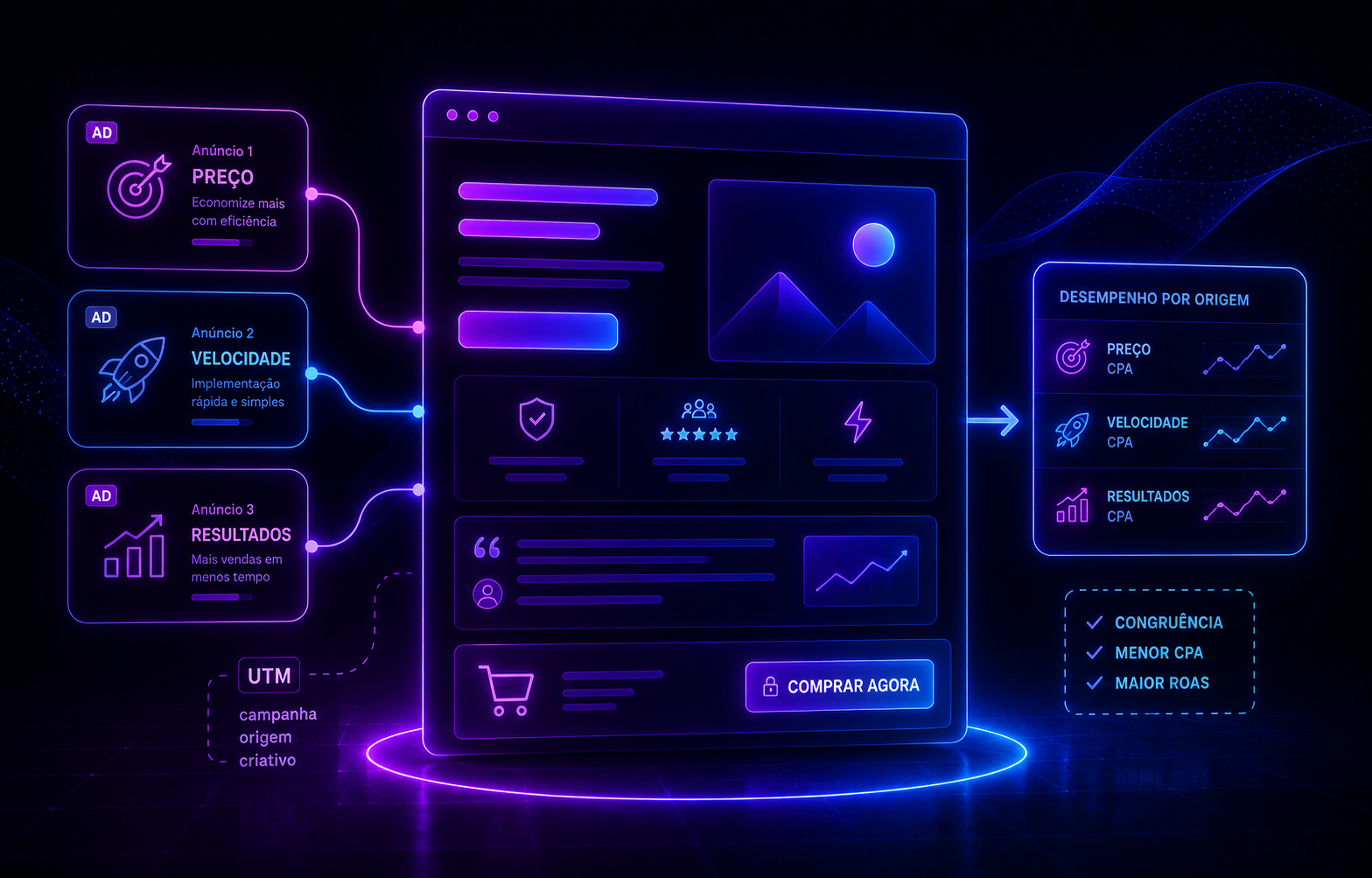
A creative about price and another about speed bring people with different expectations. Dropping both onto the same generic headline can waste context you already paid for in the ad. Landing page personalization by source lets you continue the conversation without maintaining ten disconnected pages.
The key is separating what can change—headline, proof, or the opening block—from what must stay consistent: offer, checkout, and measurement.
Use UTMs as a context signal
Campaign, ad set, and creative can carry parameters that activate a page variation. That lets the media buyer test angles without requesting a brand-new landing page for every ad.
Do not use parameters to invent promises that conflict with the offer. Personalization should improve message match, not create different products.
Personalize the first block first
Headline, subhead, and opening proof usually capture most of the gain because they fix the expectation break right at entry. That is where message match either holds or breaks after an expensive click.
If the ad opened with a CPA hook, show proof and mechanism related to efficiency. If it opened with speed, show implementation time and a demo. Small, source-aware changes above the fold often beat rebuilding the full page for every creative.
Keep offer and checkout stable
Price, guarantee, terms, and deliverables should not silently change by campaign. That complicates operations and can create trust problems.
When you run real offer tests, treat them as separate experiments and clearly identify each version.
Avoid fragmenting your data
If every variation becomes an isolated URL with no pattern, analytics and SEO get hard to maintain. Use consistent canonical rules, indexing, and events.
Paid-media personalization does not need dozens of indexable pages. For SEO, keep canonical pages with clear intent.
Evaluate by conversion, not aesthetics
Compare CPA, conversion, revenue per session, and ROAS by source. A variation can have less scroll and more sales because it gets to the point faster.
The goal is not making every version look different. It is preserving the context that earned the click.
How to take this into the operation
Turn the idea into an observable hypothesis. Define which funnel stage should move, the primary metric, and the read window. Then log which copy, creative, or page version was live. That history stops the common habit of changing five things, watching results swing, and never knowing what actually happened.
It also helps to bring copy, design, and media buying closer together. The buyer sees hooks and angles that win attention. The page team sees objections and conversion drops. When those learnings land in the same swipe file, the next creative round starts from evidence, not brainstorming alone.
Metrics that should sit next to the decision
Do not stop at CTR or conversion rate in isolation. Read clicks, page interaction, CTA, checkout starts, purchases, CPA, AOV when there are add-ons, and ROAS. On video pages, add play rate, retention, and CTA exposure. That tells you whether the change bought attention, intent, or real revenue.
Conclusion
Efficient landing page personalization shrinks the gap between creative and page without multiplying maintenance.
Start small, personalize the first fold, protect your data, and let performance decide where deeper work is worth it.
Frequently asked questions
Do I need a URL for every ad?
No. Many personalizations can happen through parameters or rules without creating separate indexable pages.
What should I personalize first?
Headline, subhead, proof, and primary image are usually the first candidates.
Does this help CPA?
It can when conversion drops because of weak message match between ad and page. Measure by campaign and creative.
Published
August 19, 2026
Categories