Message Match Between Ad and Page: Why Winning Creatives Need a Mirrored Landing Page
Message match keeps promise, language, and proof continuous from ad to page—so a winning creative does not dump traffic into a different story.
Written by

Share this
Unlock exclusive Atomicat content
Beyond the blog (/blog), browse our free marketing resources and free tools for calculators and templates (/templates). If you came here searching for landing page tips or landing page best practices specifically, start with the pillars above before browsing further. Browse /resources and /tools.
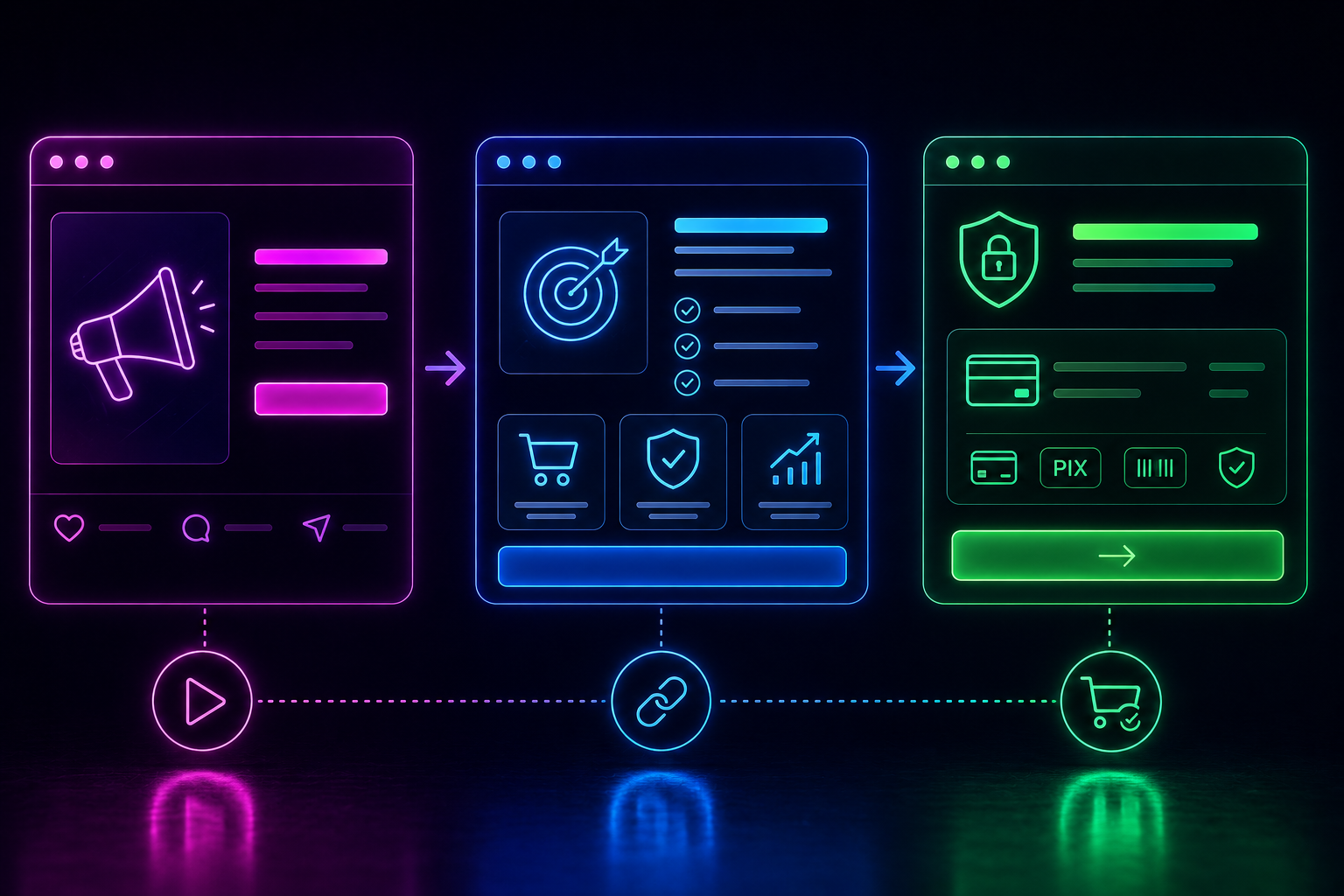
An ad can have an excellent hook rate and still send traffic to a page that kills the sale. That happens when the creative sets an expectation and the landing page starts a different conversation. The person clicked to continue a narrative, not to start over from zero.
Message match means keeping promise, angle, language, and proof coherent from ad through checkout. For the media buyer, that improves funnel reading: when message and page align, it is easier to separate a traffic problem from a conversion problem.
Mirror the core promise
If the creative talks about reducing checkout abandonment, the page headline should recognize that problem. Do not open with “transform your business” just because it is broader.
The first fold needs to confirm that the click made sense.
Use the same language as the audience
Words, examples, and even objections from the ad can continue on the page. That does not mean copying the full script. It means preserving the thread of the conversation.
If a named mechanism worked in the creative, reintroduce it on the page with explanation and proof.
Proof needs message match too
An ad with an info-product case that lands on a page full of B2B logos can feel like a different offer. Choose proof close to the angle that brought the visitor.
UTM-based personalization can help show the most relevant case without duplicating the whole page.
Read hook rate and conversion together
Hook rate measures the creative’s ability to hold attention. CTR shows interest. Conversion shows whether the promise kept making sense.
When hook and click are strong but CPA worsens, investigate the transition to the page before blaming the media.
Do not let checkout break the narrative
Product name, price, payment options, guarantee, and identity need to stay recognizable at checkout.
A strange transition at the last step can erase all the message match work done before.
How to take this into the operation
Turn the idea into an observable hypothesis. Define which funnel stage should move, the primary metric, and the read window. Then log which copy, creative, or page version was live. That history stops the common habit of changing five things, watching results swing, and never knowing what actually happened.
It also helps to bring copy, design, and media buying closer together. The buyer sees hooks and angles that win attention. The page team sees objections and conversion drops. When those learnings land in the same swipe file, the next creative round starts from evidence, not brainstorming alone.
Metrics that should sit next to the decision
Do not stop at CTR or conversion rate in isolation. Read clicks, page interaction, CTA, checkout starts, purchases, CPA, AOV when there are add-ons, and ROAS. On video pages, add play rate, retention, and CTA exposure. That tells you whether the change bought attention, intent, or real revenue.
Conclusion
Message match shrinks the distance between expectation and experience. It does not require entirely different pages, but it does require each source to find the conversation that started in the ad.
Track creative, landing page, and checkout as one conversion system, not as isolated reports.
Frequently asked questions
Does message match improve ROAS?
It can when loss happens between click and purchase because of a broken expectation.
Do I need to copy the ad headline?
Not literally. Preserve the promise and angle, adapting the form to the page context.
What should I compare?
Hook rate, CTR, landing page conversion, checkout starts, CPA, and ROAS by creative.
Published
August 22, 2026
Categories