Meta Andromeda and Your Landing Page: Why the Page Now Decides What Your Ads Earn
Meta Andromeda matches more creatives to more people. If they all land on one generic page, the gain leaks after the click. Build concept-level page variants.
Written by

Share this
Unlock exclusive Atomicat content
Beyond the blog (/blog), browse our free marketing resources and free tools for calculators and templates (/templates). If you came here searching for landing page tips or landing page best practices specifically, start with the pillars above before browsing further. Browse /resources and /tools.
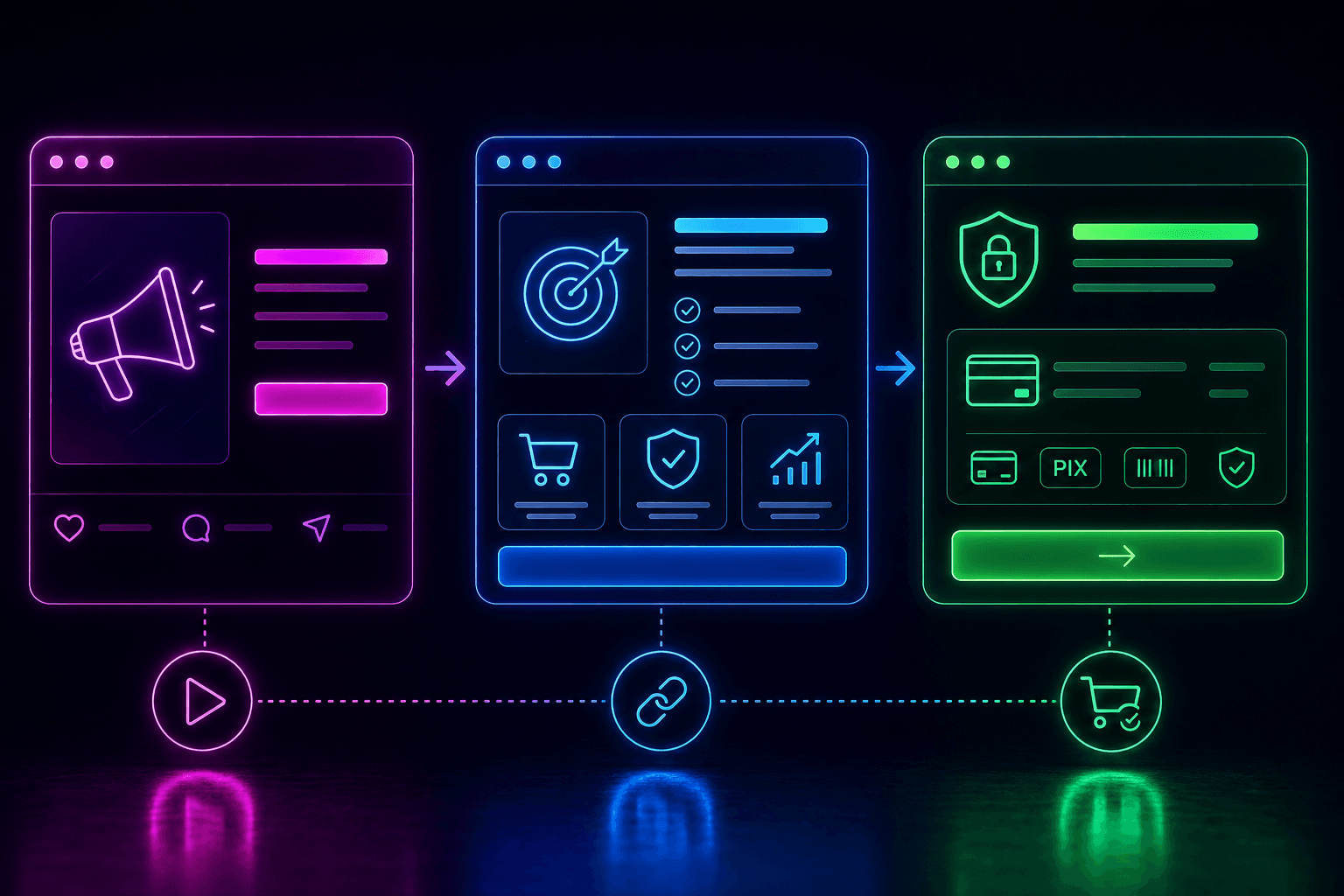
The Meta Andromeda update changed how Meta picks which ads to show, and most advertisers reacted the same way: more creatives, broader targeting, fewer ad sets. That is the right response for the ad account. But it leaves one question unanswered. Where do all those different creatives send people? If 25 different angles all land on the same generic page, the gains Andromeda gives you at the ad level leak out at the click. This guide explains what a Meta Andromeda landing page strategy looks like, why the landing page for Meta ads now carries more weight than it did, and how to support ad creative diversification with a small set of page variants instead of 25 separate builds.
What the Meta Andromeda update actually changed
Andromeda is Meta's machine learning system for ad retrieval, the first stage of ad delivery. Before any auction happens, Meta has to narrow tens of millions of eligible ads down to a few thousand candidates for a single person. Andromeda does that narrowing. Meta introduced it in late 2024 and reported, on selected segments, a 6% improvement in recall and an 8% improvement in ads quality, built on retrieval models roughly 10,000 times more complex than before. Third-party guides report that the global rollout across accounts was complete by October 2025.
The practical effect of the Meta Andromeda update is that the system is far better at matching a specific creative to a specific person. It reads the creative itself (the hook, the visual, the format, the persona it speaks to) and uses that as a targeting signal. That is why Meta and most practitioners now say the creative is the targeting.
Three changes followed for advertisers:
- Broader audiences work better. Narrow interest stacks restrict the pool Andromeda can match against.
- Fewer, larger ad sets work better. Consolidation gives the system more data per ad set.
- Ad creative diversification matters more than volume. Ten near-identical ads with different button colours count as one idea. Ten ads with different angles, personas and formats give Andromeda ten real options.
Why the landing page matters more after Andromeda
Here is the part most Andromeda guides skip. When Andromeda shows a "busy parents" creative to a busy parent and a "save money" creative to a price-sensitive buyer, it is doing precise matching work. The person who clicks arrives with a specific expectation set by that specific ad. If the landing page for Meta ads speaks to neither of them, you have paid for precise matching and thrown it away at the click.
This is the message match problem, made bigger. Before Andromeda, many accounts ran a handful of creatives on one page, so the mismatch was small. Now a healthy account runs dozens of concepts at once. One page cannot mirror all of them.
There is also a feedback loop. Meta optimises toward the conversions it receives. A creative that wins the click but loses on the page sends weak conversion signals back, and the system learns to spend less on it, even if the idea was strong. The page is now part of how Meta judges your creative. A good Meta Andromeda landing page setup protects the learning, not just the conversion rate.
The one-page-per-creative trap
The obvious answer is "build one landing page per creative." In practice that breaks within a week:
- Thirty creatives means thirty pages to build, check on mobile, track and update.
- Every offer change, price change or compliance fix has to be copied thirty times.
- Traffic is split so thin that no page collects enough data to tell you anything.
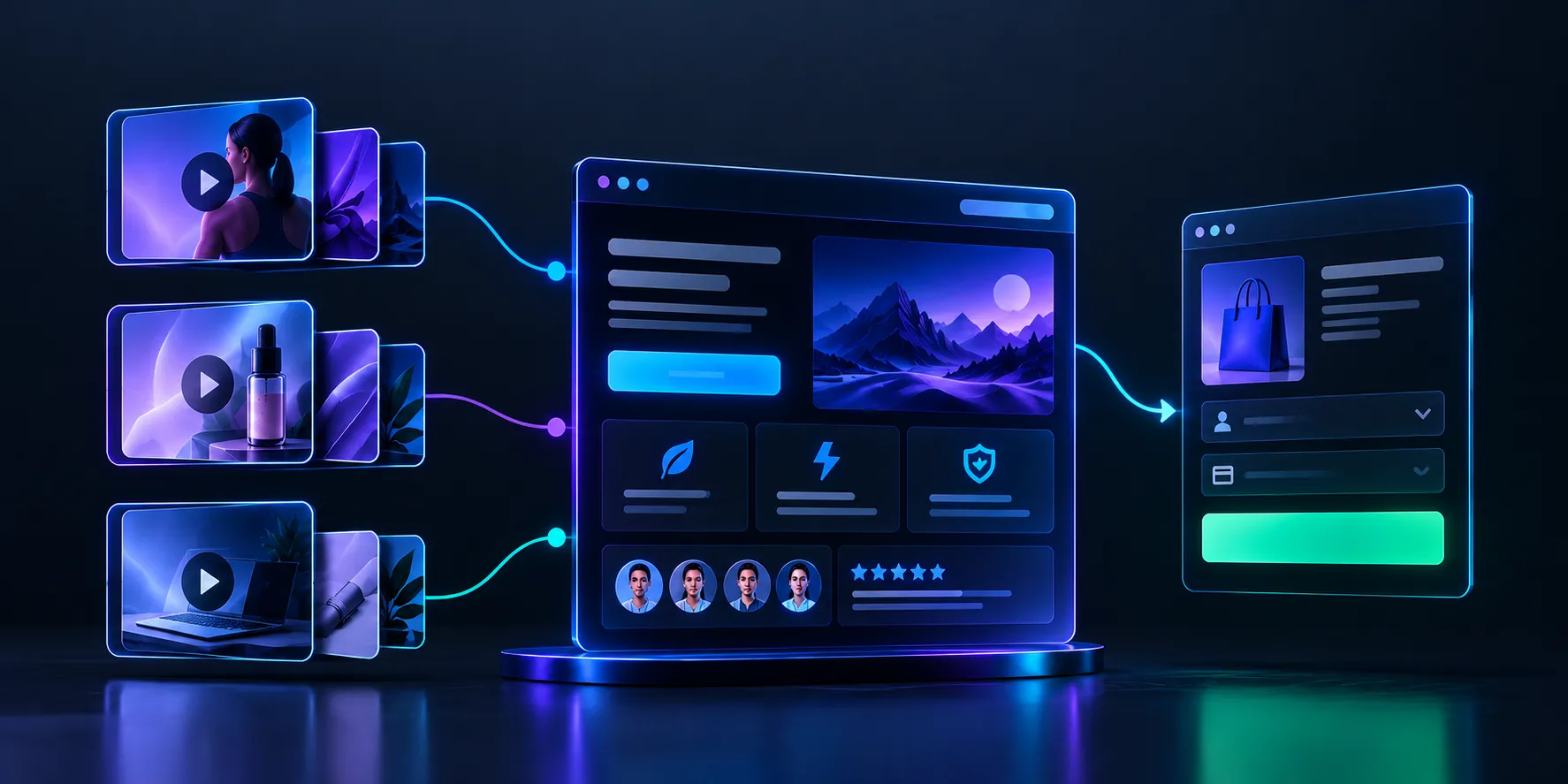
The better model is one landing page per creative concept, not per creative. Most diverse ad accounts, when you group them honestly, run three to six concepts. Each concept gets a page variant. Each variant shares the same offer, checkout and tracking, and changes only the parts the visitor reads first.
How to build a Meta Andromeda landing page system
A Meta Andromeda landing page system has five parts: concept groups, variant rules, clean URLs, tests and a refresh routine. Here is how to set each one up.
Step 1: Group your creatives into concepts
List every live creative and tag it by the core promise it makes. Ignore format for now; a UGC video and a static image can share one concept. Typical clusters look like this:
Concept cluster
Example hooks
What the visitor expects
Pain / problem
"Tired of X?"
Recognition of the problem, then the fix
Outcome / result
"Get Y in 30 days"
Proof the result is real
Price / value
"Half the cost of Z"
Clear pricing and comparison
Identity / persona
"For busy parents"
Language and visuals that feel like them
Mechanism / new
"The method nobody uses"
An explanation of how it works
Step 2: Decide what changes per variant
Keep the variants cheap to maintain by changing only the elements that create message match:
- Headline and subheadline, rewritten to continue the ad's hook in the same words.
- Hero image or video, showing the persona or scenario from the ad.
- The first proof block, chosen for the concept (a result for outcome ads, a price comparison for value ads).
- The order of sections, so the concept's strongest argument comes first.
Everything below the first screen (features, FAQ, guarantee, checkout) can stay shared. That keeps the work for 5 variants close to the work for 1 page plus 5 hero sections.
Step 3: Map ads to variants with clean URLs
Give each variant its own URL or URL parameter and add it to the matching ads. Keep UTMs consistent so you can read results by concept: utm_content can carry the concept name, for example. This turns your analytics into a concept report, which is exactly the level Andromeda works at.
Step 4: Test variants against each other
Within a concept, run an A/B test on the parts that matter: the headline angle, the proof block and the first call to action. Our landing page A/B testing guide covers sample sizes and when to stop a test. Judge winners on purchases or qualified leads, not on clicks, because clicks are what the ad already won.
Step 5: Feed new concepts in, retire tired ones
Ad creative diversification is ongoing. When a new concept starts winning in Ads Manager, give it a page variant within days, not weeks. When a concept fatigues, retire its variant together with its ads. Your page library should mirror your live concept list.
What a strong landing page for Meta ads looks like now
Some fundamentals matter more in the Andromeda era because traffic is broader and colder:
- Speed on mobile. Most Meta traffic is mobile, and broad audiences include people on slower connections. A page that takes four seconds to load loses visitors who were never warm.
- A first screen that continues the ad. The visitor should see the promise they clicked on within one second, in the same words.
- Proof that fits the concept. Testimonials for identity ads, numbers for outcome ads, comparisons for value ads.
- One clear action. Broad traffic needs fewer choices, not more.
- Tracking that survives. Browser restrictions and ad blockers mean the Meta Pixel alone misses conversions. Server-side events help Meta keep learning (see our Meta Conversions API guide).
Example: 24 creatives, 4 page variants
Picture a skincare brand running 24 creatives after consolidating into one broad campaign. Grouped by concept, they fall into four clusters: sensitive skin (8 creatives), anti-ageing results (7), price versus dermatologist products (5) and a "routine in 3 minutes" persona angle for busy professionals (4).
The brand builds one base page, then four variants. Each changes the headline, hero video and first proof block. The sensitive-skin variant opens with ingredient safety. The results variant opens with before-and-after photos. The price variant opens with a cost comparison table. The busy-professional variant opens with a 3-step routine.
Ads point to their concept's variant. After two weeks, the brand reads purchases by concept and finds the price variant converts well but has a lower average order value, so it adds a bundle offer there only. That decision is impossible with a single page, because the signal from each concept is mixed together.
Common mistakes with Andromeda and landing pages
- Diversifying ads but not pages. This is the most common gap and the subject of this whole guide.
- Over-splitting. Twenty-five variants with tiny traffic each produce noise. Start with three to five.
- Changing the offer per variant. Change the framing, not the price or the product, unless you are deliberately testing the offer.
- Judging variants on click-through rate. The ad drives the click. The page should be judged on what happens after it.
- Letting variants drift. When the offer changes, update every variant the same day. Shared sections help here.
Meta Andromeda landing page checklist
Before you launch or scale a campaign, run each Meta Andromeda landing page variant through this short checklist:
- Does the headline repeat the hook of the ads pointing to it, in the same words?
- Does the hero image or video show the same persona or scenario as those ads?
- Is the first proof block the right type for this concept?
- Does the page load in under three seconds on a mid-range phone over mobile data?
- Do all variants share one offer, one checkout and one conversion event?
- Is the concept name in the URL or UTM so you can report by concept?
- Is there a test running, with a clear metric (purchases or qualified leads) and a planned end date?
If a Meta Andromeda landing page fails two or more of these checks, fix it before adding more creatives to its concept. More ads pointing at a weak page only scales the leak.
How Atomicat supports a Meta Andromeda landing page workflow
Atomicat's landing page builder is built for this variant model. You can duplicate a base page into concept variants, change the hero section of each, and run native A/B tests across page variants. Results are read against real funnel behaviour through AtomicPixel, so a variant is judged on downstream revenue rather than clicks alone. Pages publish on AtomicHosting's CDN, which helps with mobile speed for broad Meta traffic. If you want help writing variant headlines, MIA, the built-in AI assistant, can draft them from your ad copy, and you edit from there.
Conclusion
The Meta Andromeda update rewards advertisers who give the system many different ideas to match with many different people. That work does not stop at the ad. A Meta Andromeda landing page system (a few concept-level page variants that continue each creative's promise) keeps the match intact after the click, sends cleaner conversion signals back to Meta and makes every new creative worth more. Group your creatives, build a variant per concept, test what matters and judge everything on revenue. For how those conversion signals survive ad blockers, see our Meta Conversions API landing page setup guide.
Frequently asked questions
Does Meta Andromeda look at my landing page when it chooses which ads to show?
Andromeda works at the retrieval stage and mainly reads ad-side signals such as the creative, format and engagement. It does not score your page directly. But the conversions your page produces feed back into delivery, so a weak page lowers how much Meta spends on the creatives pointing to it. Landing page quality and policy checks also apply separately.
How many landing page variants do I need for Andromeda-style campaigns?
Start with one variant per creative concept, which for most accounts means three to five. Add a variant only when a new concept gets enough spend to produce meaningful conversion data on its own page.
Should I use dynamic text replacement instead of separate page variants?
Dynamic text that swaps the headline from a URL parameter is a fast way to improve message match for small differences in wording. When concepts differ in proof, imagery or section order, a real page variant works better, because a swapped headline above a mismatched hero still breaks the story.
Will sending ads to different landing pages split my Meta learning phase?
No. Learning happens at the ad set level, based on optimisation events. Pointing ads within one ad set to different URLs does not reset or split learning, as long as every page fires the same conversion event.
What should I change first on a landing page after consolidating my Meta campaigns?
Change the first screen. Rewrite the headline and hero to continue your top-spending concept's hook, then check mobile load speed. These two changes usually affect conversion more than anything further down the page.
Published
October 20, 2026
Categories
Related Articles
Discover more insights and strategies to grow your business.