Quiz Funnel Examples: 12 Funnels That Qualify Leads (and How to Build One)
Twelve quiz funnel examples, a real case study, and how to build a lead-generation quiz that qualifies before it asks for the email.
Written by

Share this
Unlock exclusive Atomicat content
Beyond the blog (/blog), browse our free marketing resources and free tools for calculators and templates (/templates). If you came here searching for landing page tips or landing page best practices specifically, start with the pillars above before browsing further. Browse /resources and /tools.
A form asks for an email and gives nothing back. A quiz asks a few questions, gives the visitor something personal (a result, a diagnosis, a recommendation) and only then asks for the email. That simple swap is why quiz funnels have become one of the most effective ways to turn cold traffic into qualified leads. In this guide you will find 12 quiz funnel examples across industries, a real case study with numbers, the anatomy every good quiz shares, a step-by-step build process and what to look for in a quiz funnel builder.
What the best quiz funnel examples have in common
Before the examples, it helps to understand why they work, because the same principles explain every one of them:
- Value first. The visitor gets a personal answer, not a generic newsletter.
- Micro-commitments. Each click is easy, and each answer makes finishing more likely.
- Self-segmentation. Visitors tell you who they are, what they need and how urgent it is.
- Personalised offers. The result page recommends the right product for that person, not the same offer for everyone.
- Better data for sales. Answers arrive with the lead, so sales or email follow-up starts with context.
The anatomy of a high-converting quiz funnel
Almost all of the quiz funnel examples below follow the same five-part structure:
- The hook: a title that promises a personal outcome ("Find your...", "What is your...", "Which ... is right for you?").
- An easy first question: low effort, no personal data, gets the visitor moving.
- Qualifying questions: usually three to six, covering need, situation, goals and urgency, with branching where answers change what comes next.
- The email gate: placed just before the result, with a clear reason ("Where should we send your personalised plan?").
- The result and offer: a personalised result page with a matched recommendation and a clear next step.
12 quiz funnel examples by industry
These quiz funnel examples are illustrative patterns that work across many businesses. Each includes the quiz idea, what it qualifies, and what the result page offers.
1. Skincare: "Find your skin type in 60 seconds"
- Questions: skin feel by midday, sensitivity, main concern, current routine, budget.
- Qualifies: skin type, concern and price tier.
- Result: a routine of three to five matched products, with a bundle offer.
- Why it works: most buyers are unsure which product suits them; the quiz removes the guesswork.
2. Supplements: "Which energy formula fits your day?"
- Questions: sleep, activity, diet, energy dips, goals.
- Qualifies: lifestyle and main goal.
- Result: one recommended formula, with a subscription offer.
- Why it works: a personal recommendation feels more trustworthy than a generic bestseller list.
3. Fitness coaching: "What is your ideal training plan?"
- Questions: experience, available days, equipment, goal, injuries.
- Qualifies: level and commitment.
- Result: a sample week plus an invitation to the matching program.
- Why it works: the sample plan delivers value immediately, so the program feels like the natural next step.
4. Online courses: "Which career path in design suits you?"
- Questions: interests, skills, preferred work style, time available, income goal.
- Qualifies: track and readiness.
- Result: a recommended track (UX, graphic, motion) with the matching course.
- Why it works: buyers paralysed by choice get a clear recommendation.
5. Financial services: "How ready are you for retirement?"
- Questions: age range, savings habits, goals, risk comfort, current advice.
- Qualifies: readiness score and service fit.
- Result: a readiness score with tips and an offer to book a consultation.
- Why it works: a score creates curiosity and gives advisers context before the call. (Keep it educational and follow your market's financial promotion rules.)
6. B2B software: "Is your marketing team ready for automation?"
- Questions: team size, tools used, manual tasks, reporting pain, budget.
- Qualifies: company size and buying readiness.
- Result: a maturity score, a short report and a demo invitation for high scorers.
- Why it works: sales gets warm, pre-qualified demo requests; low scorers go to nurture.
7. Agencies: "What is holding your ads back?"
- Questions: monthly spend, channels, results, tracking set-up, creative output.
- Qualifies: budget and main problem.
- Result: a diagnosis with three fixes and a strategy call offer for qualified budgets.
- Why it works: it filters out prospects below the agency's minimum before anyone books a call.
8. Real estate: "What home can you afford in [city]?"
- Questions: budget, deposit, area preferences, timeline, must-haves.
- Qualifies: budget, area and timeline.
- Result: matched neighbourhoods and listings, with an agent follow-up.
- Why it works: buyers get useful information; agents get the most valuable lead data there is.
9. Pet products: "What food is right for your dog?"
- Questions: breed size, age, activity, sensitivities, current food.
- Qualifies: dog profile and problem.
- Result: a recommended food plan, often with a first-order discount.
- Why it works: owners care deeply and appreciate a tailored answer.
10. Education and languages: "What is your English level?"
- Questions: a short placement test plus goals and schedule.
- Qualifies: level and motivation.
- Result: the level, a recommended class and a trial lesson offer.
- Why it works: the test itself is valuable, and placement makes the offer feel precise.
11. Home services: "Get your solar savings estimate"
- Questions: location, roof type, monthly energy bill, ownership, timeline.
- Qualifies: eligibility and intent.
- Result: an estimated saving and a booking link for a survey.
- Why it works: ineligible visitors are filtered out before sales time is spent.
12. Coaching and personal development: "What is your leadership style?"
- Questions: behaviour scenarios, strengths, challenges, goals.
- Qualifies: style and development need.
- Result: a style profile and an invitation to a matching workshop or coaching package.
- Why it works: people love learning about themselves, and the profile makes the offer personal.
Quiz funnel examples at a glance
#
Industry
Quiz type
Main qualification
Result offer
1
Skincare
Product recommender
Skin type, concern
Routine bundle
2
Supplements
Product recommender
Lifestyle, goal
Subscription
3
Fitness
Plan builder
Level, commitment
Program
4
Courses
Path finder
Track, readiness
Course
5
Finance
Score / assessment
Readiness
Consultation
6
B2B SaaS
Maturity score
Size, readiness
Demo
7
Agencies
Diagnosis
Budget, problem
Strategy call
8
Real estate
Calculator
Budget, timeline
Agent follow-up
9
Pet products
Product recommender
Dog profile
First order
10
Education
Placement test
Level
Trial lesson
11
Home services
Estimator
Eligibility
Survey booking
12
Coaching
Personality profile
Style, need
Workshop
The 4 quiz types behind every example
Look closely and the 12 quiz funnel examples fall into four types. Choosing the type is the first decision in any lead generation quiz.
- Product recommender: "Which product is right for you?" Best for e-commerce and anything with several options.
- Score or assessment: "How ready are you?" Best for services, B2B and high-ticket offers.
- Personality or profile: "What is your style?" Best for coaching, education and brands built on identity.
- Calculator or estimator: "How much could you save?" Best for financial, home and B2B offers with measurable outcomes.
Case study: how QuizLab Brasil qualified leads with a quiz
QuizLab Brasil replaced a static lead form with a six-question branching quiz built in AtomicQuiz. Respondents were routed to one of three offer pages based on their answers, and answer patterns were used to pre-score leads before sales calls. Ad spend and traffic volume stayed the same.
Over three months, the results reported in the QuizLab Brasil case study were:
Metric
Result
Lead quality uplift
3x
Quiz completion rate
89%
Cost per qualified lead
-42%
Sales close rate
27%
As Higor Neves, Performance Director at QuizLab Brasil, put it: "They filter, educate, and warm up leads before anyone picks up the phone."
What to copy from this case:
- Branching, not just questions. Different answers led to different offer pages, so each lead saw the most relevant offer.
- Scoring before sales. Sales teams spent time on the leads most likely to close.
- Same traffic, better outcome. The improvement came from the funnel, not from more ad spend.
How to build a quiz funnel step by step
Step 1: Start from the offer, not the questions
List the two to four offers or products you want to recommend. Every result in your quiz should lead to one of them. If you cannot map a result to an offer, it does not belong in the quiz.
Step 2: Pick the quiz type and write the hook
Use the four types above. Write a title that promises a personal, specific outcome. Test two or three hooks in your ads; the quiz title should match the winning ad.
Step 3: Write the questions
- Start with an easy, fun question.
- Add qualifying questions that change the result or the follow-up: need, situation, goal, urgency, budget.
- Use images for answers where possible; they are faster to tap on mobile.
- Cut any question whose answer you will not use.
Step 4: Add branching logic
Show different follow-up questions based on earlier answers, so each visitor only sees what is relevant. A beginner should not see questions meant for an advanced user.
Step 5: Design the email gate
Place it just before the result. Explain what they will receive ("your personalised routine", "your full report"). Ask only for what you need, usually first name and email, plus phone if your sales process depends on calls.
Step 6: Write results that feel personal
Each result should name the visitor's situation in their words, explain why it fits, and recommend one clear next step. Generic results ("You might like our products!") waste all the work the visitor just did.
Step 7: Connect the follow-up
Tag and segment each lead by answers and result, then send a matching email sequence. A lead generation quiz without segmented follow-up is just a fancy form.
Step 8: Track and improve
Measure each step and fix the biggest drop first (see the metrics below).
What to look for in a quiz funnel builder
Not all quiz funnel software is built for marketing funnels. Many tools are designed for surveys or fun personality tests. When you compare options, check:
To put this into practice, explore quiz builder in Atomicat.
- Visual drag-and-drop editing that marketers can use without code.
- Conditional logic and branching between questions and results.
- Lead capture and scoring built in, not bolted on.
- Tagging and segmentation based on answers.
- Email and CRM integrations, so leads flow straight into follow-up.
- Real-time analytics for drop-offs, completions and conversions per result.
- Result pages and offers in the same funnel, so you do not need a separate page builder and checkout.
- Mobile-first design and fast loading, because most quiz traffic is mobile.
- Custom branding so the quiz looks like your brand, not the tool's.
- Templates to start from proven structures.
Quiz funnel software vs forms and survey tools
Teams often start with a form builder or survey tool because they already pay for one. That works for collecting answers, but it usually breaks at the parts that make a lead generation quiz profitable: personalised result pages, offers matched to answers, scoring, and tracking from ad click to purchase. You end up connecting four tools with integrations and losing data at every hand-off. Dedicated quiz funnel software treats the quiz, result, offer and follow-up as one flow, which is why it is easier to test and easier to measure. If your quiz exists to generate revenue rather than feedback, choose a tool built for funnels.
To put this into practice, explore lead capture page builder in Atomicat.
Quiz funnel examples by traffic source
The same quiz performs differently depending on where visitors come from. Adapt the quiz funnel examples above to your traffic:
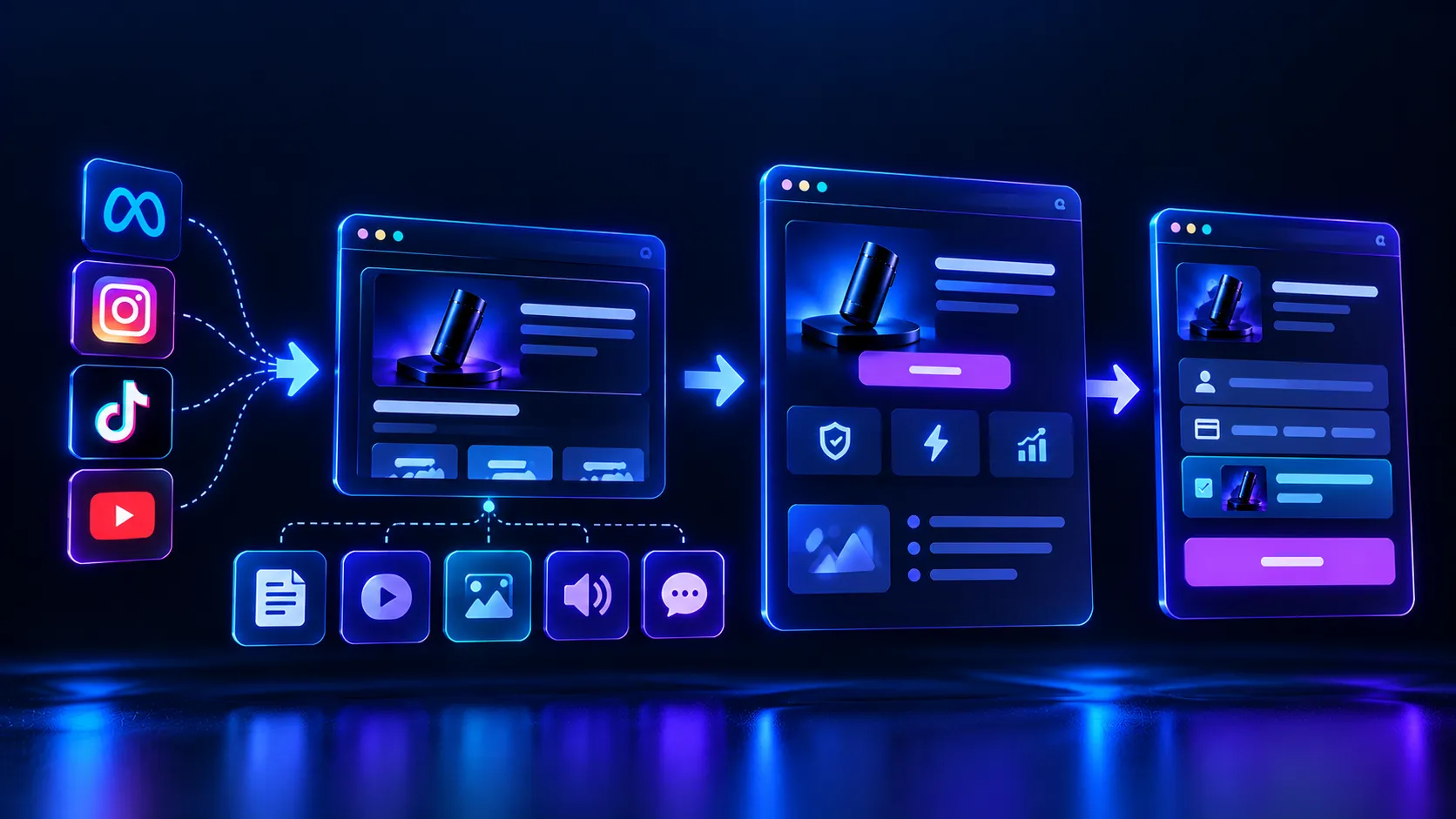
- Meta and TikTok ads (cold): use a curiosity hook, image-based answers and a short quiz (four to six questions). The quiz title should repeat the ad's hook exactly.
- Google search (warmer): visitors are already looking for a solution, so keep the quiz very short or use it as an optional "help me choose" tool on the landing page rather than a mandatory step.
- Email list (warm): you already have the email, so skip the gate and use the quiz to segment subscribers and recommend the right offer.
- Organic social and link-in-bio: use a fun, shareable hook (profile or personality types work well) and add a share button to the result.
- Website traffic: place the quiz as a "find your..." button on the homepage or product category pages to guide undecided visitors.
Track results by source. A lead generation quiz that converts well from email may need a stronger hook for cold ads.
Quiz funnel metrics to track
Metric
What it tells you
Typical fix if weak
Start rate (ad click to first answer)
Whether the hook and first screen work
Match the ad, simplify the first question
Completion rate
Whether questions hold attention
Cut questions, add a progress bar, use images
Email capture rate at the gate
Whether the result feels worth it
Clarify what they get, reduce fields
Result page click-through
Whether the offer matches the result
Make the recommendation more specific
Cost per qualified lead
Overall efficiency
Improve the weakest step above
Sales close rate by result
Which segments are most valuable
Shift ad budget toward high-value segments
Common quiz funnel mistakes
- Too many questions. Each extra question costs completions. Keep only what changes the result or follow-up.
- Generic results. The result is the reward. If it feels generic, trust drops at the moment you ask for the sale.
- Asking for the email too early. Ask before the result, not before the first question.
- No segmentation. Collecting answers and then sending everyone the same email wastes the main benefit of a quiz.
- Entertainment over qualification. A fun quiz with no link to your offers produces leads that never buy.
- Ignoring mobile. Small tap targets and slow loading kill completions on phones.
Where quiz funnels fit in your marketing
Quiz funnels work best in the middle of the funnel, especially with cold paid social traffic, where visitors are curious but not ready to buy. They can also act as a presell before a sales page; see our presell page guide for how quizzes compare with advertorials and other formats. For very high-intent search traffic (someone searching for your brand plus "price"), a quiz can add unnecessary steps, so test carefully.
Quizzes also make strong lead magnets, because the personalised result is more valuable than a generic download. Our lead magnet guide covers how to choose between formats.
Turning quiz funnel examples into your own quiz: a worked example
Here is how a small online language school could turn example 10 into a working funnel in a week.
- Offer mapping: three offers (beginner group course, intermediate conversation club, advanced exam prep) and a free trial lesson.
- Hook: "What is your real English level? Find out in 2 minutes."
- Questions: six short placement questions with increasing difficulty, then two questions on goals (work, travel, exams) and available time. Branching skips the hardest questions for visitors who miss the early ones.
- Gate: "Where should we send your level report and personal study plan?" asking for first name and email.
- Results: three level results, each naming the visitor's goal and recommending the matching course with a free trial lesson.
- Follow-up: a five-email sequence per level, with exam-focused emails for visitors who chose "exams" as their goal.
- Tracking: completion rate, email capture rate, trial bookings and paid enrolments by level.
After two weeks, the school sees most trial bookings come from the intermediate result, so it creates a second ad hook aimed at intermediate learners. That is the real power of a quiz: the answers tell you which audience to buy more of.
Build your quiz funnel with AtomicQuiz
AtomicQuiz is Atomicat's quiz funnel builder, made for marketing funnels rather than surveys. It offers a drag-and-drop editor, smart logic and branching, lead capture and scoring, built-in segmentation and tagging, real-time analytics on drop-offs and completions, email and CRM integrations (including Mailchimp and ConvertKit) and custom branding.
A quiz can also sit as a presell page before the offer. Because AtomicQuiz is part of Atomicat, the quiz, result pages, sales pages (AtomicBuilder), video (AtomicPlayer), checkout (AtomicPay) and tracking (AtomicPixel) live in one funnel. That is how QuizLab Brasil routed respondents to three different offer pages and traced which answers led to sales. Start from one of Atomicat's templates or build your own.
For practical guidance, see our guide to sales funnel stages.
Conclusion
The best quiz funnel examples all do the same few things: they promise a personal outcome, ask only questions that matter, capture the email just before the result, recommend a specific offer and follow up based on answers. Pick the quiz type that fits your offer, borrow the structure from the examples above, build it in a quiz funnel builder that keeps quiz, pages and checkout together, and improve the weakest step every week. As the QuizLab Brasil case shows, the same traffic can produce far better leads when the funnel does the qualifying.
Frequently asked questions
How long should it take someone to complete a quiz funnel?
Aim for one to three minutes. That is usually long enough to ask meaningful qualifying questions and short enough to keep completion rates high on mobile. If your quiz takes longer, check whether every question changes the result or the follow-up.
Should every quiz result recommend a different product?
Not necessarily. Results can share a product but differ in framing, bundle or starting point. What matters is that each result explains why the recommendation fits that person, using their answers.
Can I run a quiz funnel without paid ads?
Yes. Quizzes work well from organic social posts, email lists, website pop-ups, link-in-bio pages and blog posts. Organic traffic is often warmer, so completion rates can be higher, though volume is usually lower than with ads.
How do I write quiz questions that do not feel like a sales interrogation?
Frame questions around the visitor's goals and situation, not your sales criteria. Use friendly language and image answers, and start with something easy or fun. Ask budget-type questions later, with options framed as ranges rather than exact numbers.
What should I do with leads who get a "not a fit" result?
Do not ignore them. Send a helpful result with free resources or a lower-priced offer, and add them to a nurture sequence. Situations change, and today's poor fit can be next quarter's customer.
Published
August 11, 2026
Categories
Related Articles
Discover more insights and strategies to grow your business.